What Makes a Good Camera?
People ask me from time to time about which cameras I’d recommend, or what makes a camera “good,” so today I’d like to think it through. This is a genuinely difficult question to answer. I always struggle with it. It sounds simple, but it isn’t.
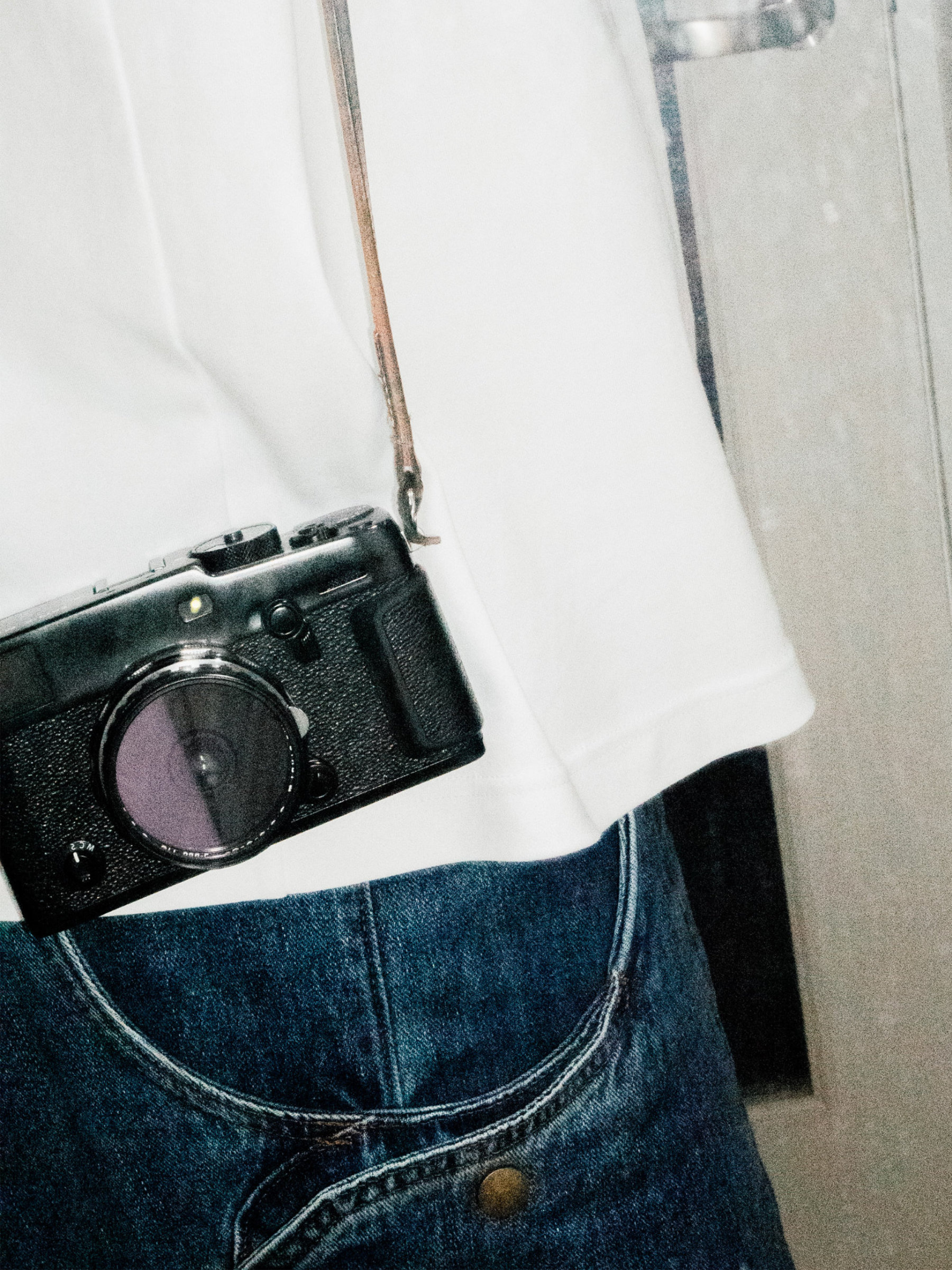
The camera in the photo is a FUJIFILM X-Pro3. I loved it, but it’s also a camera I let go of after about a year. The design and the image quality were both faultless, yet somehow it didn’t quite click with me. It’s a popular camera among photography enthusiasts, and I liked that it had no prominent logo on the front. And still, I parted with it.
Design comes down to personal taste, so setting that aside, let me think about what makes a good camera. I’m not someone who’s particular about gear to begin with, but even so, I’ve bought all sorts of cameras searching for one that fits me. Some I grew fond of, some I didn’t. Personal feel, a kind of compatibility, perhaps? Even when I’m drawn to the features or the design, there are cameras that just don’t feel right once I hold them or look through the viewfinder. And conversely, there are cameras I don’t much like the look of, yet somehow the good photos seem to pile up.
Weight matters, too. Some days I walk around all day to shoot, and on those days, the lighter the better—it’s far less tiring. One body and a few lenses comes to maybe two or three kilograms. Camera gear is surprisingly heavy. Light gear lightens the spirit as well. That said, in my experience, a lighter camera doesn’t mean better photos. So what are the conditions for a good camera, really?
If lightness is what counts, couldn’t you just use a phone? I get asked that occasionally, but I can’t warm to phone cameras—the lens distortion is too strong—and I don’t recommend them. A digital camera records image data through its lens and the sensor in the body. Sensors differ from maker to maker, but not by much. What has the greatest effect on the image is the lens. Change the lens and the impression of the photo changes dramatically. Strictly speaking, lenses have distortion built into them; a digital SLR corrects for it by calculating within the body, or you correct it on a computer during editing. But the distortion in a phone’s lens often can’t be undone, even on a computer. If you enjoy shooting with your phone, take a close look at the data sometime. You’ll find photos where the distortion is plain to see.
So if a good lens makes a good camera—well, the viewfinder matters too. How a viewfinder looks varies greatly depending on the type of camera. Anyone about to buy a camera would do well to look into these differences first; they’ll be less likely to regret it. And as you start considering a body’s features, all sorts of factors come up: autofocus speed, burst rate, megapixels, and more. These really do vary from maker to maker. Once you actually set out to buy, there’s a fairly complex set of things to weigh.
I’ve written about the basic elements of a camera. On that basis, when I think about what makes a camera “good,” all these elements matter—yet I have a feeling they don’t have much to do with good or bad. The reason is simple. Say you’ve been shooting for a few years and you upgrade to a newer, higher-spec camera. Even if you go for something truly high-end, do your photos change dramatically? They don’t. In other words, the quality and impression of a photo aren’t decided by the camera alone. Beyond the body’s performance, they shift greatly with how you capture light and shadow, with composition, with how you shoot, with the subject. And since it’s digital, editing on a computer matters too. That work, too, has a large effect on the final image.
Thinking it through this way, I start to see why recommending a camera is so hard. The conversation proceeds on the sole premise that a high-spec camera produces good photos—and that’s why I’m stuck for an answer about what makes a good one. The other elements matter just as much. Of course, a higher-spec camera is unquestionably a better camera, but the price climbs along with it, and recommending one to someone carries a certain responsibility, so it calls for careful thought.
The “good photo” most people probably want to take isn’t determined by a camera’s features alone; the other elements play a large part as well. Perhaps an absolutely good camera simply doesn’t exist in the first place.
So, which good camera can I recommend? In the end, there’s no clear answer. But one thing I can say is this: the best path is to search out the camera and lens that suit you, yourself. Go to an electronics store, handle the real thing, hold it, look through the viewfinder, and choose the one that somehow feels right. Walking that path, I think, is the only way to meet a good camera.