The Lifespan of Light
Today is Thursday, July 23rd, 2026. This morning, the beach sandals I’d used on the balcony for years broke. No warning — all at once. Exposed to wind, rain, and UV out there, they must have been degrading a little every day at the molecular level. I’ll have to buy a new pair. Before I knew it, I turned fifty this year. The age when the remainder of a life starts to come into view. When I think of lifespan, the light bulb comes to mind first.
With LED bulbs, for instance, it’s now standard for the package to state a specific figure: “rated life: 40,000 hours.” As long as something exists as an industrial product, it has a definite end. Of course, that number is only an average derived from testing on mass-produced goods; it doesn’t tell you exactly when the bulb you bought will finish its job.
There was a time when we couldn’t live without fire. From lighting to cooking, fire was at the center of daily life. Fire has no concept of a “rated life,” but it burns as long as there is wood or oil, and goes out when there’s nothing left to burn. Neither fire nor a bulb shines forever.
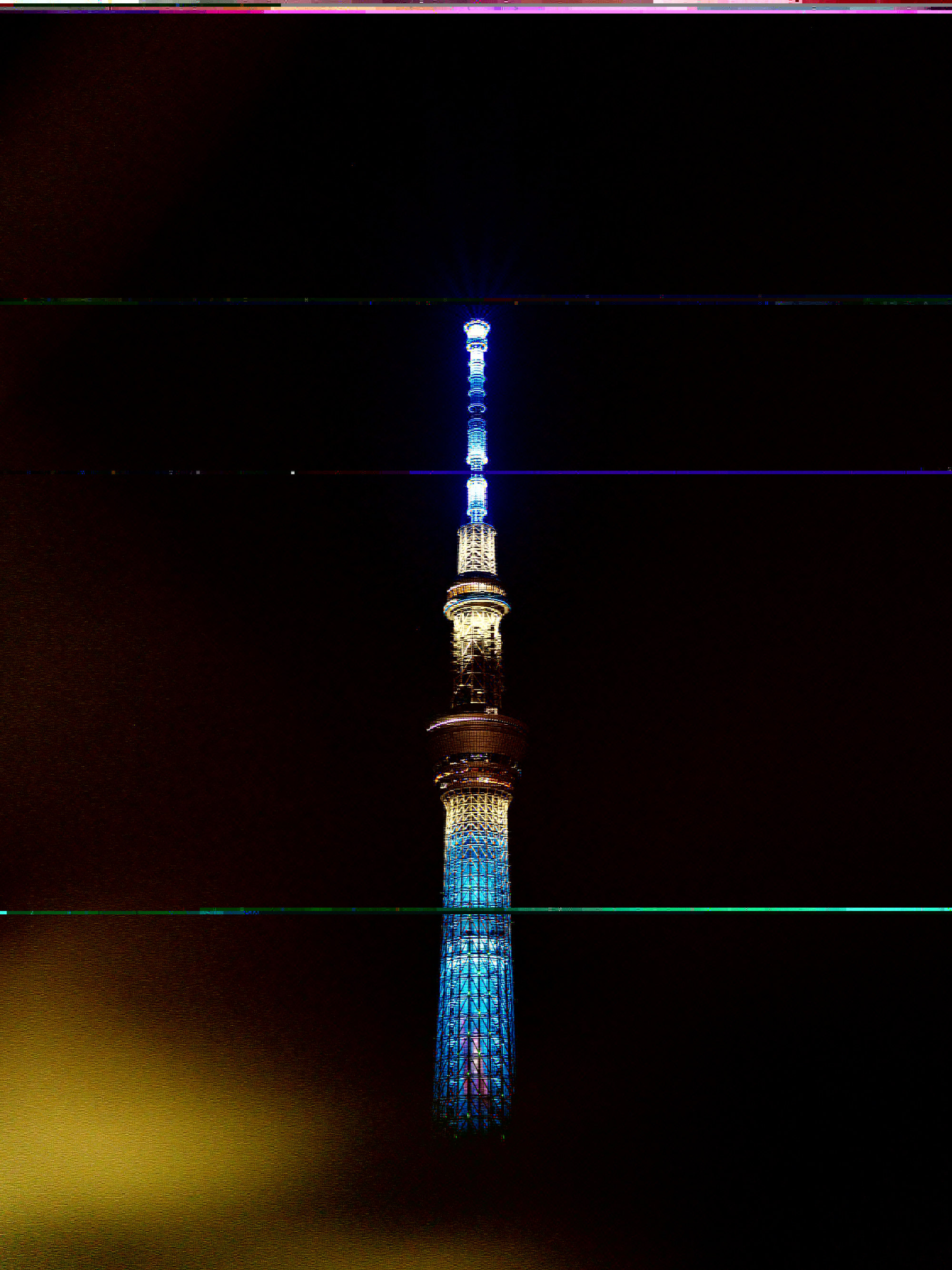
Lately I’ve been photographing Tokyo at night. What photography needs, first of all, is light. If a world with zero light existed, you could shoot it and get nothing but a black image. Moonlight, plus the signs in commercial districts and the light spilling from shops, the windows of buildings and homes, streetlights, traffic signals. Tokyo overflows with light even at night, so shooting at night is possible.
When the city’s light isn’t enough, I use the camera’s strobe, which lights the darkness for an instant. It fires for a few thousandths of a second and brightens what’s in front of me. That light, vanishing instantly, meets its end the moment it’s released. The flash tube inside has a definite lifespan, measured in flash count. Each time I press the shutter and the strobe fires, it uses up one of its own lifetimes.
It feels as though a photograph records light and shadow in an instant, but strictly speaking it isn’t a point in time. If the shutter speed is 1/125 of a second, then that 1/125 of a second is what’s recorded. However short, what’s in the frame is a span of time.
Since I started photographing Tokyo at night, where my attention goes has shifted a little. Beyond the 1/125 of a second the shutter catches — further outside it. The time that the light itself possesses, being used up right now in front of me. Artificial light flickering toward its end, and the strobe that shines while shaving off its own life.
Why I want to photograph the city at night, I don’t really know myself. Perhaps it has something to do, somewhere, with having started to be conscious of my own lifespan.